
Earshot
Live Transcription
iOSReal-time, on-device captions for the conversations around you — private by design, with speaker separation and no account required.
Product Manager · Builder
Independent Work
Apps I've designed, built, and shipped on my own — end to end.
Live Transcription
iOSReal-time, on-device captions for the conversations around you — private by design, with speaker separation and no account required.

Meditation Timer
iOS · watchOSA minimal meditation timer for iPhone and Apple Watch — daily goals, streaks, and Apple Health, with no accounts, ads, or subscriptions.
Photo Archive Viewer
WebA self-hosted, offline viewer that turns years of exported Instagram posts into a calm, browsable timeline — your archive, your server.
Built at Google
Zero-to-one audio AI products I built at Google — on-device, accessibility-first, and shipped to billions of Android devices.
Real-Time Captions
AndroidFree, real-time speech-to-text that captions the world around you for people who are deaf or hard of hearing — in 80+ languages, on device.

Captions for Any Media
Built into AndroidAutomatic, on-device captions for any audio or video on your phone — calls, podcasts, social clips — with no Wi-Fi or data connection needed.

Hear More Clearly
AndroidFilters, augments, and amplifies the sounds around you — boosting quiet speech and reducing background noise through your headphones.
Work
Take a Look
Accessibility
The official introduction of Live Transcribe, a free Android app that uses Google's automatic speech recognition technology to bring real-time captions into everyday conversations.
A deep dive into the technology behind Live Transcribe — Google's app that provides real-time, continuous speech-to-text transcription for people who are deaf or hard of hearing.
How Sound Amplifier and Live Transcribe work together to make the world's audio more accessible to people who are deaf or hard of hearing.
Accessibility
The launch of Live Caption — automatic, on-device captions for any media playing on your phone, with no Wi-Fi or data connection needed.
Matthew, who was born deaf, relied on video chat and lip-reading to communicate with his son Harry. When he got his Google Pixel, he tried out Live Caption and for the first time ever, he could do something that people all over the world do every day — he made a phone call to his son.
Speaking
A Google I/O 2019 session on Android's hearing aid streaming support and the audio framework changes that enable direct connectivity between Android devices and hearing aids.
A conversation at CES 2021 exploring how Google and Microsoft are advancing accessibility in technology, from assistive features to inclusive design principles.
A talk at IMUG (International Multilingual User Group) on the challenges and breakthroughs of bringing internet access and language support to Myanmar.
Practical guidance on preparing for and excelling in Meta-style product management interviews, with focus on leadership and drive competencies.
Human Impact
As a CODA, or 'child of deaf adults,' Tony has always straddled two worlds. And now that he hasn't been able to see his parents in over a year, staying close is more important, but also more difficult, than ever. But with the help of assistive technology...
CREDIT: Associate Producer. Passion project promoting this beautiful documentary championing normalization of people living with disabilities. The award-winning film documenting the rare and risky twin pregnancy of a quadriplegic woman premiered at Mountainfilm Festival in May 2022.
View at MountainfilmA feature on Accessible Media Inc. covering the impact of assistive technology and accessibility-first product design.
Our latest version of TalkBack, Android's screen reader, includes features developed in collaboration with the blind and low-vision community.
Acknowledgement
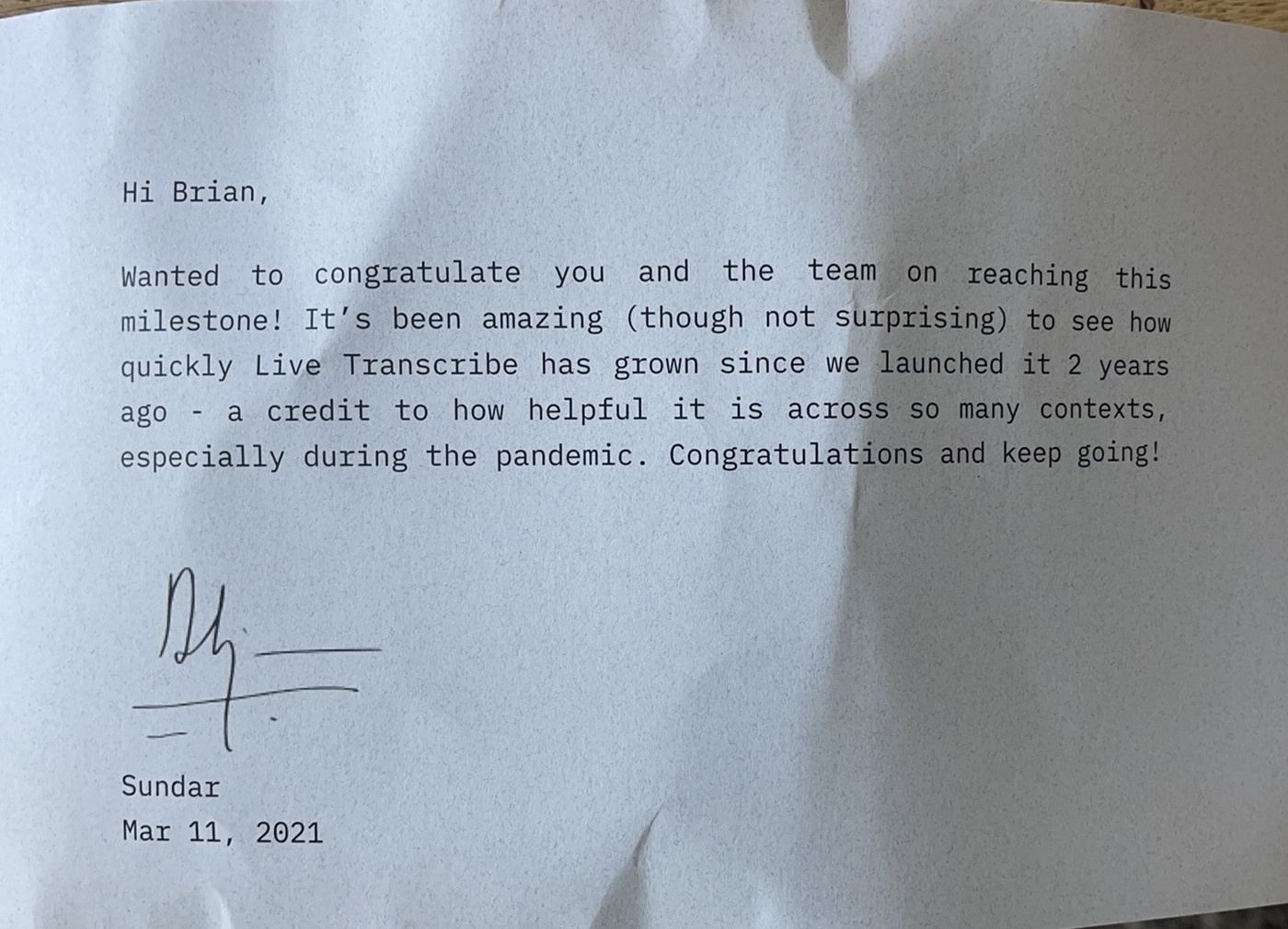
A personal note from Google's CEO congratulating Brian and the team on the Live Transcribe milestone — recognizing the product's rapid growth and impact, especially during the pandemic.
Research
M. Slaney, R.F. Lyon, R. Garcia, B. Kemler, C. Gnegy, D. Kanevsky, S. Savla, V. Cerf
Explores new evaluation methodologies for audio assistance technologies, proposing that user interface issues become more important than conventional measures like word-error rate when results appear in real time.
Read Publication Proceedings of the 2015 ACM International Joint Conference on Pervasive and Ubiquitous Computing (UbiComp) · 2015M. Sleeper, S. Schnorf, B. Kemler, H. Haddadi, A. Rahmati
Investigates public attitudes toward vehicle-based sensor data and recording through two studies, revealing key tensions around privacy, safety, and data ownership.
Read Publication Technical Disclosure Commons — Defensive Publications Series · 2021B. Kemler, D. Cohen, N. Bar, Y. Tsafir, B. Schlesinger, A. Belozovsky, M. Tadmor Ramanovich, B. Xia, S. Tickner, B.C. Barbello, T. Upstill, H. Fitoussi, E. Laurent, J.D. Wilson
Describes techniques enabling smartphones to provide on-device, system-level live captioning with language translation — without requiring internet connectivity.
Read Publication Google Research · 2020B. Kemler, C. Gnegy, D. Lyon, D. Kanevsky, J. Hershey, M. Slaney, R.A. Garcia, S. Savla, V. Cerf
Proposes ecological measurement approaches for audio assistance technologies designed to serve a global audience, with focus on speech enhancement, sound amplification, and audio classification.
Read Publication Open Source · GitHubSwift · SwiftUI · TypeScript
The open-source home for my independent apps and experiments — including Earshot (on-device live captions for iPhone), Now (a meditation timer for iPhone and Apple Watch), and Instascape (a privacy-first Instagram archive viewer).
View on GitHubWriting
Intellectual Property
EP3963580A1
A computing device that generates captions directly from audio data being output from content sources — the foundational technology behind Live Caption on Android.
View Patent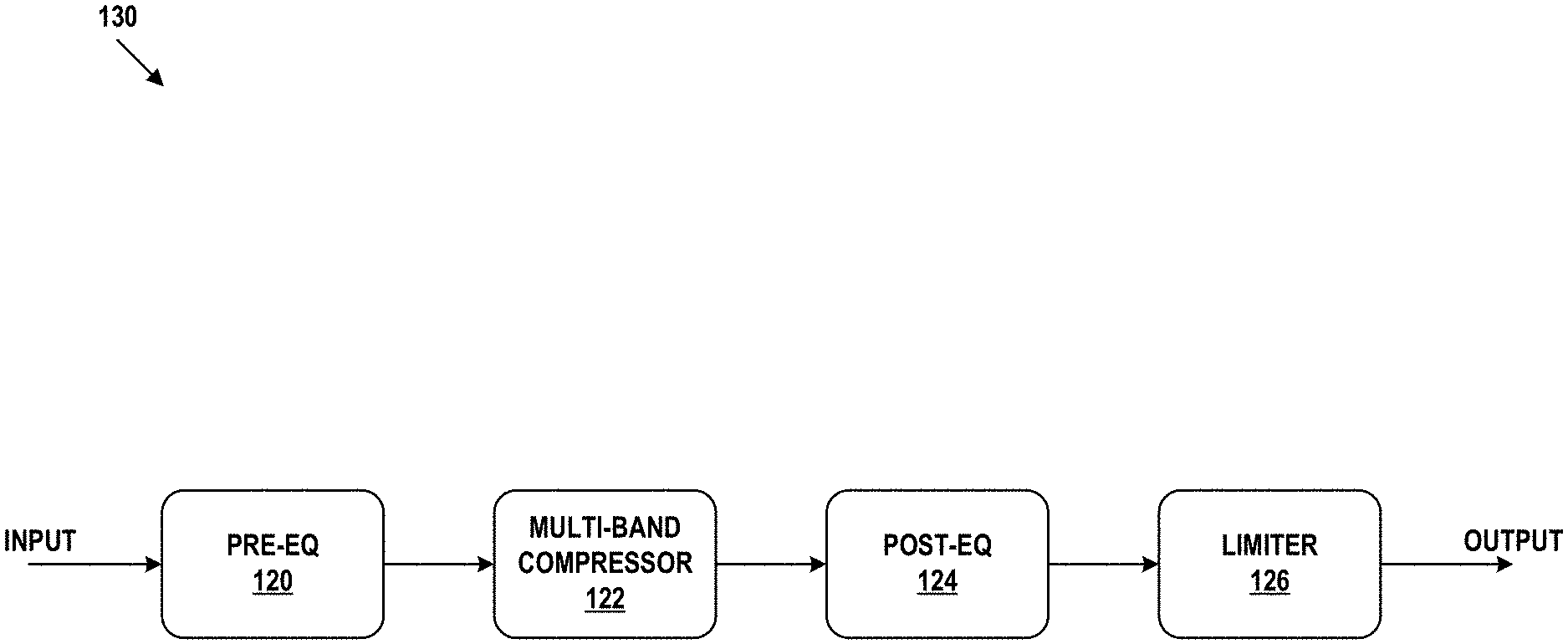
US20230292076A1
Architecture for dynamics processing effects on computing devices, enabling real-time audio enhancement and sound amplification for accessibility.
View Patent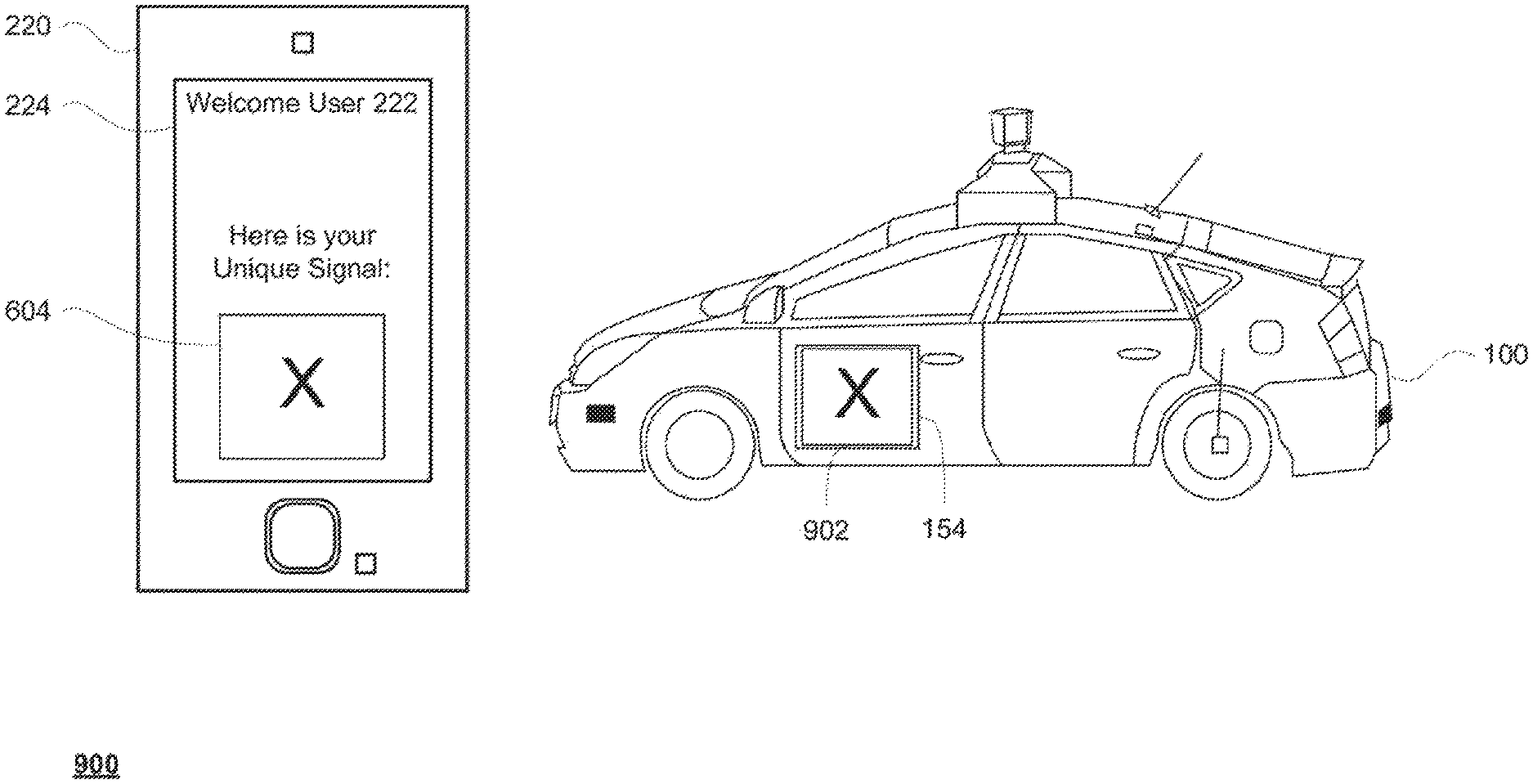
US10821887B1
Protects user privacy when dispatching driverless vehicles by generating unique, ephemeral signals so riders can identify their vehicle without exposing personal information.
View Patent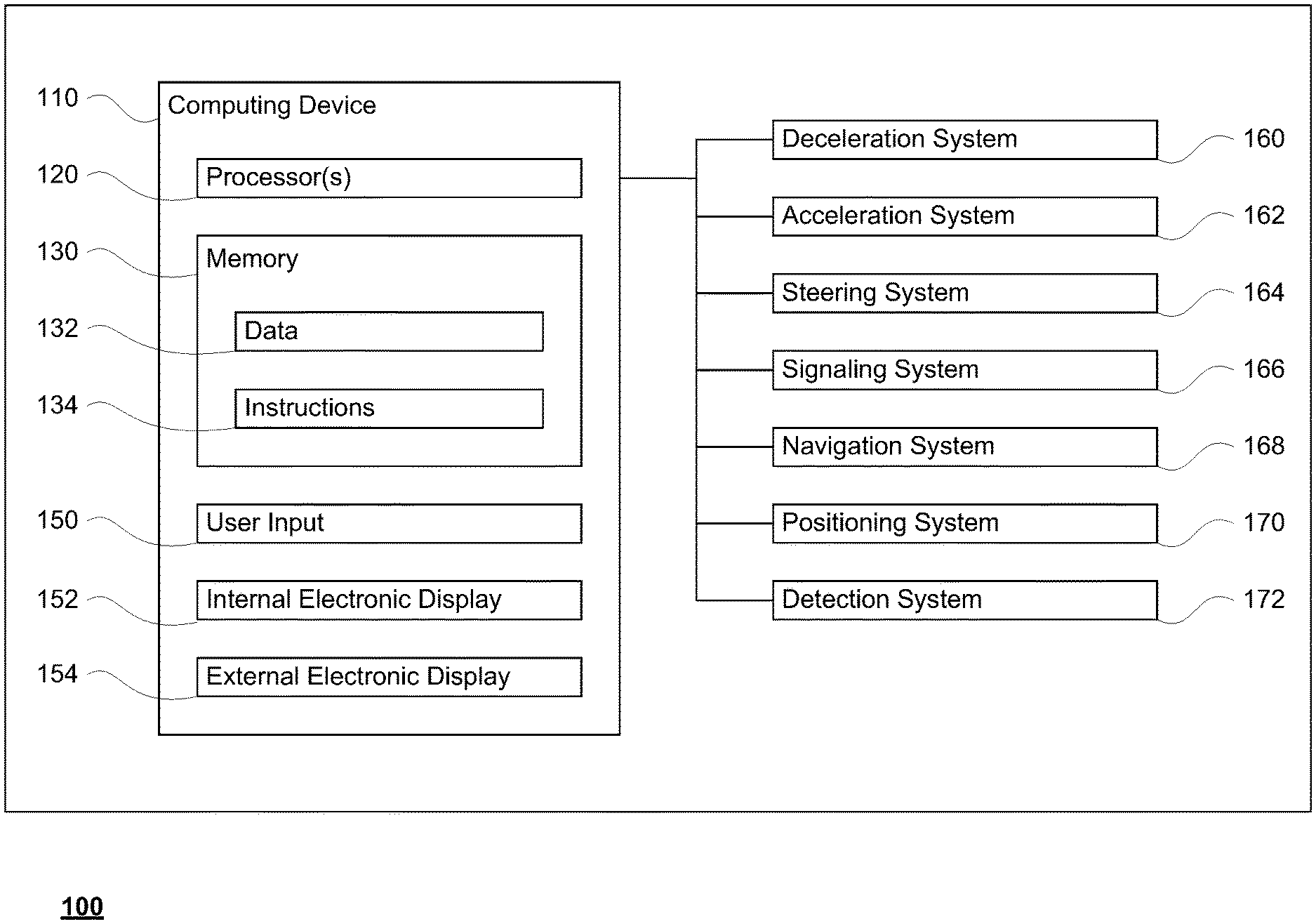
US12348907B1
Uses augmented reality overlays on a rider's device to visually identify an approaching driverless vehicle while preserving privacy — no physical markers needed.
View Patent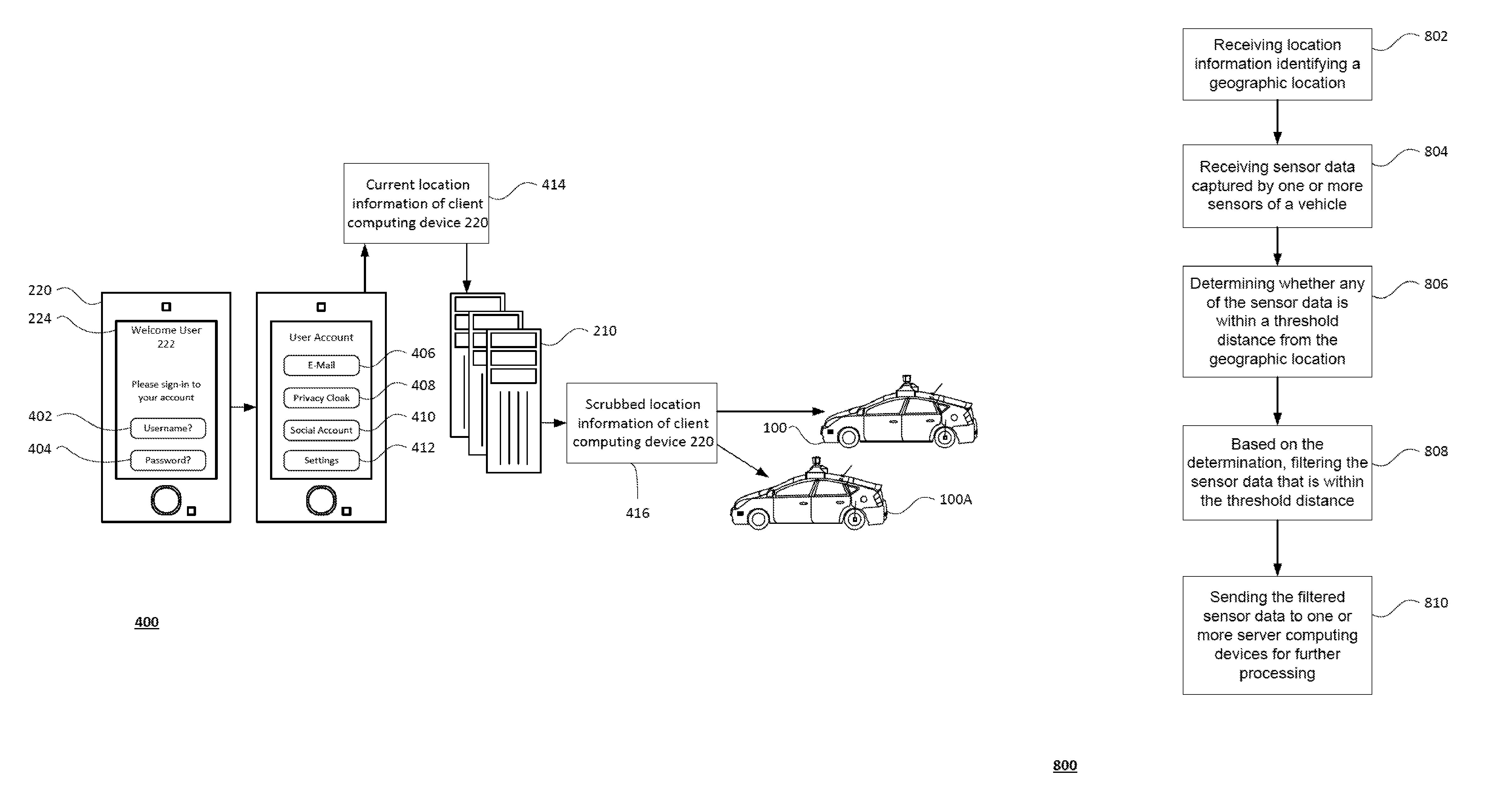
US9436180B1
Anonymizes user identity from nearby autonomous vehicles gathering sensor data, ensuring that location-based services don't compromise personal privacy.
View Patent